
Woodstock, New Brunswick
WOODSTOCK BUSINESS
FINANCING.
Woodstock is the commercial centre of the upper Saint John valley — a county market town on the Trans-Canada corridor near the Maine border, where trucking companies, warehousing and distribution operations, repair and service businesses, farm-support firms, contractors and professional practices serve a wide rural market on both sides of the river. BizFin.ca helps Woodstock businesses explore equipment financing, commercial vehicles, working capital and growth options through one Canadian review.
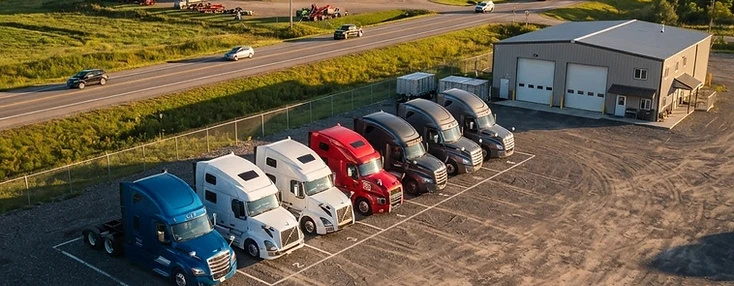
COMMERCE AT THE CROSSING OF RIVER, FARM AND HIGHWAY.
Woodstock works as the trading centre of the upper Saint John valley: a county seat where the Trans-Canada corridor meets a wide farming region and the Maine border sits within easy reach. That geography gives its private businesses a natural market — trucking and distribution operations running valley, provincial and cross-border routes, a famous row of dealerships and repair shops, farm-service firms supplying operations up and down the river, contractors and trades, and the professional practices, retailers and restaurants a market town grows around itself.
The financing needs read two ways. Assets: commercial trucks and trailers, shop and repair equipment, warehouse and material-handling systems, construction machinery, agri-service equipment, kitchen and hospitality packages, business technology. Cash: inventory and materials, supplier payments, receivable timing, contract mobilization, fleet growth, seasonal needs, staffing, expansion. The review keeps the two in separate files deliberately — asset money for assets, operating money for operations.
EQUIPMENT FINANCING IN WOODSTOCK.
Shop and repair equipment, warehouse and handling systems, construction machinery, agri-service gear, kitchens.
COMMERCIAL VEHICLES IN WOODSTOCK.
Highway trucks and straight trucks, service units, trailers, delivery vehicles — business use only.
WORKING CAPITAL IN WOODSTOCK.
Inventory, supplier payments, mobilization, receivable timing, staffing, seasonal needs.
WOODSTOCK BUSINESSES SERVED.
Carriers, warehouses and repair shops, farm-service firms, contractors, retail, hospitality, professional practices.
The town and its context
A COUNTY SEAT WHERE THE HIGHWAY MEETS THE RIVER.
A county town on the upper Saint John earns its keep by serving everything around it, and Woodstock does: the courthouse-and-commerce rhythm of a seat of government, the valley's farm economy at its back, the highway corridor running past the door and the Maine crossings close enough that carriers, distributors and suppliers work both sides of the line as a matter of routine. The border crossing itself is public infrastructure — context, never a financing target — and questions of customs or cross-border compliance belong to your own professional advisors, not to a lender.
What that geography adds up to is a dense, unglamorous, durable private economy: freight and logistics, equipment and repair, farm supply and service, construction, retail and hospitality, and the professional offices that keep a market town's books. Those firms own real assets and ride real cash cycles — which is exactly what a financing review is built to read.
Trucking, distribution and warehousing
THE CORRIDOR ECONOMY — TRUCKS, DOCKS AND YARDS.
Carriers based here run the valley and far beyond it — regional routes, provincial long-haul and cross-border freight through the nearby Maine crossings — alongside courier and logistics services, warehousing and distribution operations, fuel and bulk distributors, and the repair and maintenance shops that keep every fleet on the road. For a town this size the transport layer is unusually thick, and it is built almost entirely on private operators.
Vehicle financing here is business-use, full stop: a route, a contract or a customer book behind every unit. Requests range from a single straight truck for a first dedicated run, through staged renewals for an aging fleet, to a full program for an operator scaling all at once. Late-model used units with complete maintenance records review on the same footing as new, and trailers, lift gates and shop equipment can ride in the same acquisition where the program allows.
Agricultural support and the farm service economy
THE BUSINESSES BEHIND THE VALLEY'S FIELDS.
The upper valley's farms generate a thick layer of private support businesses, and much of it works through this town: equipment sales and service, repair and machining shops, seed, feed and supply operations, storage and handling, fuel and bulk delivery, agri-service contractors. Those firms serve the whole farming region — their customer books run from one end of the valley to the other — and their own needs are ordinary business needs: machinery, trucks, shops, systems and cash to keep the counter busy.
A farm-support business is a business file, not a farm file: the equipment, vehicles and working capital are reviewed on the firm's own revenue and operations, with no government agricultural programs, crop guarantees or farm-lending schemes implied anywhere in the review. Handling and loading equipment, workshop machinery, service trucks and trailers, storage systems — all standard business-use financing, with proven used equipment reviewed on its remaining working life.
Construction, trades, retail and the town
CONTRACTORS, COUNTERS AND KITCHENS.
A market town builds and rebuilds constantly, and Woodstock's construction layer — general contractors, excavators, renovators, the finishing trades — works the town and the rural region around it. The retail and service core answers for the same wide market: retailers and restaurants, accommodations, personal services, and the professional practices — legal, accounting, insurance, design — that every county seat concentrates. Corridor traffic and valley tourism keep the hospitality side honest all season.
Those businesses own commercial assets: construction machinery and contractor tools, fixtures and fit-out, kitchen and refrigeration packages, point-of-sale and business systems. Their cash calendar follows the market — inventory and staffing ahead of the strong stretch, receivable timing on commercial and municipal accounts, the quiet weeks planned rather than absorbed. A review can lay that year out as one picture.
Equipment and vehicles in Woodstock
WHAT A MARKET TOWN OWNS TO WORK.
Read across the whole economy, the asset list here is the hardware of a service-and-transport town: commercial trucks and trailers, forklifts and dock equipment, shop machines and diagnostic systems, construction machinery, agri-service equipment, kitchen and refrigeration packages, and the business technology behind professional offices. Files arrive strongest as one complete acquisition — the quote or equipment list covering everything, delivery and installation travelling inside the file where the program allows.
A market town also runs on second-hand iron, and there is nothing second-rate about it: a documented loader from a wound-down operation, a shop's kept tools, a truck with its maintenance book complete. The review weighs remaining working life against cost and says what it finds — the same standard applied to a new unit off the lot, because the honest question is what the machine will do next, not where it has been.
Working capital, growth and succession
THE MONEY BEHIND THE TRUCKS — AND WHO OWNS THEM NEXT.
Working capital keeps a corridor town moving: inventory and materials bought ahead of demand, supplier payments carried, receivable timing bridged on the accounts that settle in thirty or sixty days, contract mobilization for the firms that mobilize crews, staffing for the season, marketing for a competitive counter, fleet growth timed to new runs, and the expansion moves — a second bay, a bigger yard, a new service line — that a healthy market town keeps making. Operating money is never dressed as equipment financing; the review keeps the files separate on purpose.
Succession is a live question in a town built on owner-operated firms: a carrier's routes and relationships sold as a going concern, a dealership or repair shop with a loyal counter trade passing hands, a family retailer handing over the keys, a farm-service business moving to a second generation. Acquisition and succession files are genuine and reviewable — weighed on the business, its cash flow, the buyer's contribution and the program behind the file, with no guarantees offered before the review is finished.
EXPLORE NEARBY NEW BRUNSWICK COMMUNITIES.
Hartland
Upper Saint John Valley
Dairy-and-potato farm-service town at the covered bridge.
Business financing in Hartland
Florenceville-Bristol
Upper Saint John Valley
Global frozen-potato-processing hometown on the upper river.
Business financing in Florenceville-Bristol
Perth-Andover
Upper Saint John Valley
River-crossing agri-service and forestry-support village.
Business financing in Perth-AndoverQUESTIONS ABOUT FINANCING IN WOODSTOCK.
Ready to explore?