
Perth-Andover, New Brunswick
PERTH-ANDOVER BUSINESS
FINANCING.
Perth-Andover sits where the road crosses the Saint John River in southern Victoria — a river-crossing service community within the Regional Community of Southern Victoria whose private economy is the everyday kind: contractors and construction firms, transport and service fleets, agri-service and forestry-support businesses, repair shops, restaurants and stores serving a wide rural area. BizFin.ca helps Perth-Andover businesses explore equipment financing, commercial vehicles, working capital and growth options through one Canadian review.

A business community within the Regional Community of Southern Victoria.
THE BUSINESSES THAT SERVE SOUTHERN VICTORIA.
Perth-Andover's role was set by the river: where the road crosses, a community grows, and around it stretches a wide rural territory that needs what a crossing point provides — construction and excavation crews, transport and service fleets, farm and forestry support, repair shops, fuel and parts, restaurants and accommodations, and the professional and personal services a spread-out population travels to. No giant employer is needed to explain this economy; the territory explains it.
The needs divide into the two familiar kinds. Assets: contractor machinery, service trucks and trailers, shop tools and diagnostic gear, agri-service and property-maintenance equipment, kitchen and store packages, professional-office systems. Cash: materials and parts inventory, supplier accounts, project mobilization, receivable timing, seasonal preparation, staffing, fleet growth. Each kind is covered below in its own lane — never mixed.
EQUIPMENT FINANCING IN PERTH-ANDOVER.
Contractor machinery, shop and diagnostic tooling, agri-service gear, kitchens, store fixtures, office systems.
COMMERCIAL VEHICLES IN PERTH-ANDOVER.
Service trucks, delivery and freight units, trailers, fleet additions — business use only.
WORKING CAPITAL IN PERTH-ANDOVER.
Materials and parts ahead of the jobs, mobilization, receivable timing, seasonal preparation.
PERTH-ANDOVER BUSINESSES SERVED.
Contractors, fleets and repair shops, agri-service and forestry-support firms, hospitality, village commerce.
The community and its context
A CROSSING POINT AND THE TERRITORY IT SERVES.
The crossing is the constant: a river town at the centre of a rural service territory that reaches into farm country and wooded uplands alike. The regional facilities here — health, government, schools — are public context, never financing targets; the audience is the private layer that serves the same territory: the contractors, carriers, shops, hosts and storefronts doing the everyday work of a rural economy.
Municipally, the community has not been its own village since the province's restructuring: Perth-Andover sits within the Regional Community of Southern Victoria, and that territory — not just the streets — is its market. A financing review reads the service area as market: who the customers are, what work backs the revenue, how the cash arrives. The municipal map is footnotes.
Contractors, construction and property services
THE BUILDERS OF A RURAL TERRITORY.
Construction and the trades are the backbone of a service economy: general contractors, excavators and site-work operators, well and septic services, renovation and finishing trades, and the property-maintenance firms — grounds, buildings, snow — that rural properties and seasonal places depend on. Their work ranges across the whole territory, and their equipment ranges just as wide.
The files are the classic small-contractor kind: machinery and attachments, service trucks and trailers, shop and welding tooling, diagnostic systems. Complete acquisitions — quote covering the unit, attachments, delivery and installation where the program allows — read strongest, and proven used machinery with documented hours prices on the working life left in it.
Fleets, transport and the repair economy
THE TRUCKS AND SHOPS THAT TIE THE REGION TOGETHER.
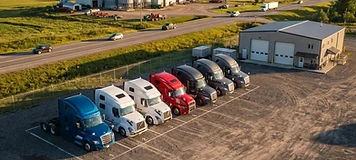
A crossing point collects traffic, and traffic needs trucks: freight and delivery vehicles running the valley roads, service fleets for the contractors and trades, fuel and aggregate haulers, farm-equipment transport, and the trucks that move timber and supplies out of the uplands. Around the fleets works the repair economy — automotive, heavy-truck and small-engine shops, welding and machining, tire and parts operations — small firms whose bays and tooling are their own financing needs.
The basis of every vehicle file is the business behind the wheel: the routes, the contracts, the customer list — not the driver's driveway. A single unit for a new operator, staged additions for a growing fleet, or a fuller program for a firm scaling at once all read on the operation's real shape, and trailers or equipment ride along where the program permits.
Farm support, forest support and the village economy
THE FIELDS, THE WOODS AND THE COUNTERS.
The territory around the crossing is working land on both sides — farms on the flats and forestry in the hills — and the businesses in between serve both: agri-service and equipment firms, fuel and feed supply, logging and hauling support, and the trades that keep rural properties running. Those firms own handling equipment, service trucks, trailers, shop tools; their needs are ordinary, heavy and reviewable.
The village itself runs the commercial layer of a rural service centre: restaurants and accommodations, stores and services, equipment and parts dealers, professional practices and agencies. Kitchens and refrigeration, fixtures and point-of-sale, service vehicles, office systems — the full small-commerce asset list, reviewed on the business, never on the postcode.
Working capital, growth and succession
THE CASH AND THE HANDOVER OF A SERVICE ECONOMY.
Working capital funds the working year of a service territory: materials and parts bought ahead of the jobs, supplier accounts, mobilization onto a project or a season, staffing, receivable timing on the accounts that settle in arrears, the spring build and the winter lull, fleet additions, marketing that keeps a rural name trusted, and the growth moves — a second truck, a bigger shop, a new service line. Cash needs are filed as cash needs — nothing here disguises one kind of money as the other.
Succession in a service community is the handover of reputations: a contractor's machinery and customer book sold as a going concern, a repair shop passed to the mechanic who ran it, a family store changing generations, a fleet business bought by the driver who knew it best. Those files are genuine and reviewable — weighed on the business, its cash flow, the buyer's contribution and the program behind the file, with nothing promised before the review says it.
EXPLORE NEARBY NEW BRUNSWICK COMMUNITIES.
Woodstock
Upper Saint John Valley
Upper-river farm-service and Trans-Canada border-highway town.
Business financing in Woodstock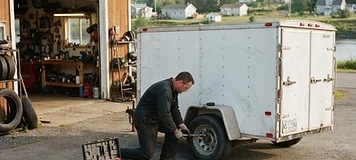
Hartland
Upper Saint John Valley
Dairy-and-potato farm-service town at the covered bridge.
Business financing in Hartland
Florenceville-Bristol
Upper Saint John Valley
Global frozen-potato-processing hometown on the upper river.
Business financing in Florenceville-BristolQUESTIONS ABOUT FINANCING IN PERTH-ANDOVER.
Ready to explore?