
Florenceville-Bristol, New Brunswick
FLORENCEVILLE-BRISTOL BUSINESS
FINANCING.
Florenceville-Bristol sits on the upper Saint John River — a river-village business community within the District of Carleton North whose economy is built on the potato: farm supply and agri-service, food processing and packaging, the cold chain, and the fleets, shops and industrial services that keep a food-manufacturing valley moving. BizFin.ca helps Florenceville-Bristol businesses explore equipment financing, commercial vehicles, working capital and growth options through one Canadian review.
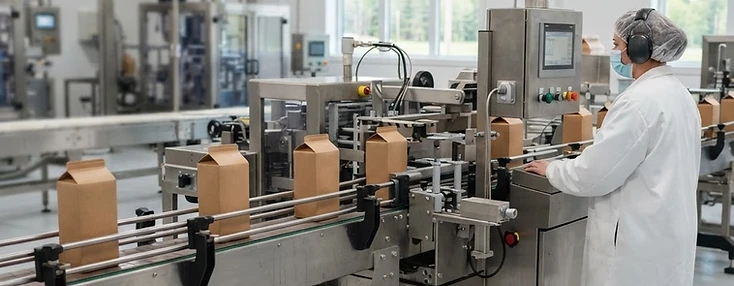
A business community within the District of Carleton North.
THE ECONOMY OF A POTATO VALLEY, FROM FIELD TO FROZEN.
Few communities this size carry an industrial identity this strong: a valley where the potato moves from the surrounding fields through washing, processing, packaging and freezing to tables on other continents, and where a whole private economy has grown up around that movement — the farm-supply and machinery-service firms, the industrial-maintenance and equipment-repair contractors, the packaging and refrigeration suppliers, the carriers moving product in and freight out, and the stores, trades and services of the village itself.
The needs split along the two usual lines. Assets: processing and packaging equipment, commercial refrigeration and cold storage, conveyors and material handling, warehouse systems, agri-service machinery, commercial trucks and trailers, shop and maintenance tooling. Cash: raw materials and packaging inventory, supplier purchases, the harvest-season surge and its receivable tail, maintenance inventory, staffing, transport growth. Each side is covered below, deliberately kept apart.
EQUIPMENT FINANCING IN FLORENCEVILLE-BRISTOL.
Processing and packaging equipment, refrigeration and cold storage, conveyors, handling systems, agri-service machinery.
COMMERCIAL VEHICLES IN FLORENCEVILLE-BRISTOL.
Product and supply trucks, tractors and trailers, service and delivery fleets — business use only.
WORKING CAPITAL IN FLORENCEVILLE-BRISTOL.
Packaging and materials inventory, the harvest surge, receivable timing, maintenance inventory, staffing.
FLORENCEVILLE-BRISTOL BUSINESSES SERVED.
Farm-supply and agri-service firms, maintenance and repair contractors, carriers, packaging and refrigeration suppliers, village commerce.
The community and its context
A VILLAGE THAT MAKES FOOD FOR THE WORLD.
The reputation is global, and it is earned on the valley floor: this district is known around the world for frozen-potato processing, a food-manufacturing cluster that anchors demand for maintenance, supply, logistics and skilled trades across the whole upper river. No plant, brand or facility is the subject of this page — the processing operations and every public asset are context, never financing targets. The audience is the private layer that makes the cluster run: the firms that feed it, fix it, move for it and supply it.
Municipally, the community has not been an independent town since New Brunswick's restructuring: Florenceville-Bristol is a business community within the District of Carleton North, and the district's rural territory is as much its market as the village streets. A review reads where the business operates and what it earns; the municipal sign matters to the map, not to the file.
Processing, packaging and the cold chain
THE MACHINERY OF A FOOD-MANUFACTURING VALLEY.
The industrial economy here runs on equipment: processing lines and their feed systems, packaging and palletizing equipment, commercial refrigeration and cold-storage systems, conveyors and material handling, the warehouse and dock gear that moves product at speed. Around the plants themselves works the contractor layer — industrial maintenance, millwright and mechanical services, electrical and controls firms, equipment-repair and welding shops, sanitation and technical services — each one a private business with its own asset list and its own financing questions.
Files in this sector read best as complete acquisitions: a quote covering the system, its installation and the related soft costs where the program permits, priced on what the equipment will actually produce. Used and refurbished food-sector machinery with documented history reviews on its remaining working life, and the answer — either way — comes in plain operational language.
Farm supply and the agri-service layer
THE FARMS BEHIND THE VALLEY'S PRODUCT.
Upstream of the plants are the fields, and between them sits the agri-service economy: seed and supply operations, machinery and equipment service, storage, grading and handling businesses, agronomy-adjacent suppliers, and the transport that carries the harvest from the flats to the yards. Those firms serve a working farm region — and they are themselves ordinary private businesses whose shops, trucks and handling gear are exactly what equipment financing is for.
Their asset lists run from agri-service tooling and handling equipment to storage systems, service trucks and trailers. Complete packages with delivery and set-up where the program allows review strongest, and proven used machinery prices on the working life it has left — no seasonal page about agriculture ever needed an invented acreage to make that true.
Fleets, freight and the village economy
THE TRUCKS, COUNTERS AND TRADES OF THE DISTRICT.
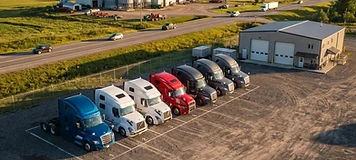
A food-manufacturing valley moves by truck: product outbound to highways and borders, supplies and packaging inbound, aggregates and materials for the contractors, and the delivery and service fleets of the village itself. Every truck in a valley like this earns freight or supplies, and the file is priced on exactly that — with trailers and handling gear riding in the same package where the program permits.
The village and district run their own commercial layer too: stores and services, restaurants and accommodations, equipment and parts dealers, the trades and repair shops of a spread-out rural population. Their fixtures, refrigeration, kitchens, business systems and service vehicles are commercial assets, reviewed on the same basis as anything else in the valley — the business, not the address.
Working capital, growth and succession
THE CASH AND THE FAMILY FIRMS OF THE VALLEY.
Working capital here follows the food year: raw materials and packaging inventory bought ahead of the run, supplier purchases through the harvest surge, staffing for the peak, receivable timing on the accounts that settle after the rush, maintenance-related inventory through the quieter stretch, fleet and transport growth, and the expansion moves — another line, a bigger facility, a new service territory. The two never swap labels: equipment money buys equipment, operating money buys the season.
Succession runs deep where businesses carry family names: a farm-supply firm passing between generations, a maintenance or repair shop sold to the tradespeople who ran it, a carrier's units and contracts bought as a going concern, a village store changing hands. Those files are genuine and reviewable — weighed on the business, its cash flow, the buyer's contribution and the program behind the file, with nothing promised in advance.
EXPLORE NEARBY NEW BRUNSWICK COMMUNITIES.
Woodstock
Upper Saint John Valley
Upper-river farm-service and Trans-Canada border-highway town.
Business financing in Woodstock
Hartland
Upper Saint John Valley
Dairy-and-potato farm-service town at the covered bridge.
Business financing in Hartland
Perth-Andover
Upper Saint John Valley
River-crossing agri-service and forestry-support village.
Business financing in Perth-AndoverQUESTIONS ABOUT FINANCING IN FLORENCEVILLE-BRISTOL.
Ready to explore?