
Tracadie, New Brunswick
TRACADIE BUSINESS
FINANCING.
Tracadie is the Acadian Peninsula's francophone commercial centre — retail, professional and service businesses with a catchment that runs across the peninsula, construction and transport firms, commercial fleets, restaurants and hotels, and the suppliers that keep the coast's economy running. BizFin.ca helps Tracadie businesses explore equipment financing, commercial vehicles, working capital and growth options through one Canadian review.
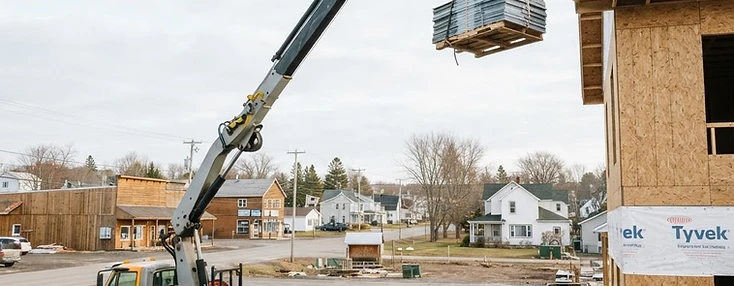
A FRANCOPHONE SERVICE CENTRE WITH A COAST TO SERVE.
Tracadie works the way a regional centre works: it holds the shops, garages, restaurants, hotels, offices and suppliers that a string of smaller coastal communities finds it easier to visit than to duplicate. The regional municipality formed in 2014 covers a wider geography than the old Tracadie-Sheila town core — the earlier name survives as a search term and a habit, not as a second place — and the businesses inside it serve a market measured in hours of driving, not city blocks.
Financing that economy splits the same two ways everywhere on this site, and the split matters here as much as anywhere. Assets: contractor equipment, shop and repair gear, commercial trucks and trailers, restaurant and hospitality fit-out, refrigeration, service-business equipment, professional technology. Cash: inventory and supplier payments, project mobilization, materials, seasonal preparation, staffing, receivable timing, fleet growth. Equipment money and operating money are different files, reviewed as different files.
EQUIPMENT FINANCING IN TRACADIE.
Contractor equipment, shop and repair gear, welding and fabrication, refrigeration, service-business equipment.
COMMERCIAL VEHICLES IN TRACADIE.
Commercial trucks and trailers, service and delivery fleets, cartage and courier units — business use only.
WORKING CAPITAL IN TRACADIE.
Inventory, supplier payments, project mobilization, seasonal preparation, staffing, receivable timing.
TRACADIE BUSINESSES SERVED.
Retail and professional firms, contractors and trades, carriers and repair shops, restaurants, hotels and suppliers.
The town and its context
A COMMERCIAL CENTRE FOR A WHOLE REGION.
A service centre earns its role by being where the surrounding communities come to buy, repair, eat, meet and hire — and this one has earned it across a wide francophone territory. That catchment is the quiet asset behind a great many local files: a business here can draw customers from communities that are themselves too small to support it alone, and the review reads exactly that — where the revenue honestly comes from, and how far the service area reaches.
The regional-municipality geography of 2014 matters to a business page only in one practical way: the market is bigger and more mixed than the old town-core maps suggest. A renovation contractor serving a two-hour radius, a wholesaler supplying small stores along the coast, a restaurant that fills on game nights and festival weekends — the file is built on the operation's real reach, not on the municipal line.
Shops, offices and counters
THE SERVICE AND RETAIL ECONOMY OF THE PENINSULA.
Retail of every scale, groceries, pharmacies and personal services, professional practices and business services, restaurants, cafés, accommodations, event and recreation businesses — the daily commercial layer of the region, running in French first and serving a customer base that stretches well past town limits. These are owner-operated businesses to a large degree, and their needs are concrete: fixtures and fit-out, refrigeration and food-service equipment, point-of-sale and practice-management systems, service vehicles, delivery units.
The cash side of that economy runs on terms: inventory bought ahead of demand, supplier payments, payroll through the slower weeks, receivables that settle on commercial schedules, the marketing that keeps a wide catchment driving to this town rather than past it. A working-capital file here is a plan for the whole calendar — not an emergency instrument, and never a relabelling of operating costs as asset purchases.
Building and moving
CONSTRUCTION, TRADES AND TRANSPORT.
A growing region builds constantly — homes, commercial fit-outs, public-adjacent private projects — and the contractors and trades who do that work are a spine of the local economy: general contractors, renovators, excavators, the finishing trades, welding and machine shops, automotive and equipment repair. Transport sits beside them: cartage firms, fuel and building-material delivery, courier runs and the fleet-supported service businesses that reach the whole peninsula.
Their files are built on work, not on showrooms: machinery sized to the jobs actually being won, service trucks behind booked routes, trailers, shop tools and diagnostics, straight trucks and tractors with contracts or customer books behind them. Complete eligible packages — machine plus delivery plus install-related needs inside one quote, where the program permits — review especially well, and fleet requests get read as programs: which unit earns what, replaced in what order, justified by which contracts.
Behind the fishing coast
THE PENINSULA'S FISHERIES-SUPPORT LAYER.
The peninsula's fishing communities are served from towns like this one — and serving them is private business too: seafood suppliers and distributors, cold-storage and cold-chain operators, gear and equipment vendors, transport firms moving product to market, the repair shops that keep harbour-side machinery working. This page keeps a careful boundary: the fleets and the fishery's own economics belong to the coastal ports and their own pages, and no numbers are invented here — no landings, no quotas, no seasons.
What reviews well is the support operation itself: a refrigerated truck behind scheduled runs, cold-room and freezing equipment with a documented service history, handling gear, workshop tooling, a distributor's fleet addition. Where a request ties to a licence or a vessel, coverage depends entirely on the lender program behind the file — and the review states plainly what a given option covers before anything is signed.
Equipment and vehicles in Tracadie
WHAT THE REGION RUNS ON.
Read together, the equipment list covers construction machinery, shop and diagnostic equipment, welding and fabrication gear, commercial trucks, straight trucks and trailers, service and delivery vehicles, kitchen and refrigeration packages, retail and practice systems, and the technology that professional and service businesses run on. All of it is business-use financing, and each file is priced on the work the asset will perform next.
Used equipment reviews on the same footing as new when its history is honest: a shop's kept-up machines bought with the business, a highway tractor with a verifiable maintenance record, a refrigeration unit with its service log complete. Remaining working life against cost is the standard in both cases — because what an asset still does, not what it once cost, is what the business is actually buying.
Cash, growth and the next owner
REGIONAL WORKING CAPITAL AND THE NEXT OWNER.
Working capital keeps a catchment business steady: inventory and supplier payments, materials and mobilization ahead of projects, seasonal preparation, staffing, receivable timing across a customer base that settles on its own schedules, fleet additions as routes justify them, and the growth moves — a second location, a new service line, a bigger yard. Every one of those is a cash matter, reviewed as a cash matter, with no equipment attached unless the business wants it.
Ownership changes hands in a regional centre the way it does anywhere with deep roots: a supplier passing to the next generation, a contractor's outfit carried on by a long-time employee, a service firm bought by its manager, a partner exit in a family business. Acquisition and succession are genuine reviewable files — weighed on the business, its cash flow, the buyer's contribution and the program behind it, with the answer delivered plainly, whichever way it lands.
EXPLORE NEARBY NEW BRUNSWICK COMMUNITIES.

Caraquet
Acadian Peninsula
Acadian coastal fishing and seafood-processing town.
Business financing in Caraquet
Shippagan
Acadian Peninsula
Northern Acadian fishing port with fishery-service businesses.
Business financing in Shippagan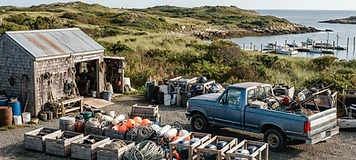
Lamèque
Acadian Peninsula
Island fishing-port economy — processing, peat and marine services.
Business financing in LamèqueQUESTIONS ABOUT FINANCING IN TRACADIE.
Ready to explore?