
Shippagan, New Brunswick
SHIPPAGAN BUSINESS
FINANCING.
Shippagan is the working centre at the tip of the Acadian Peninsula — a marine-commercial town where fisheries-support suppliers, marine services, cold-storage and refrigeration businesses, repair shops, construction trades, professional firms, restaurants and retailers keep the fishing coast supplied, cold and running. BizFin.ca helps Shippagan businesses explore equipment financing, commercial vehicles, working capital and growth options through one Canadian review.
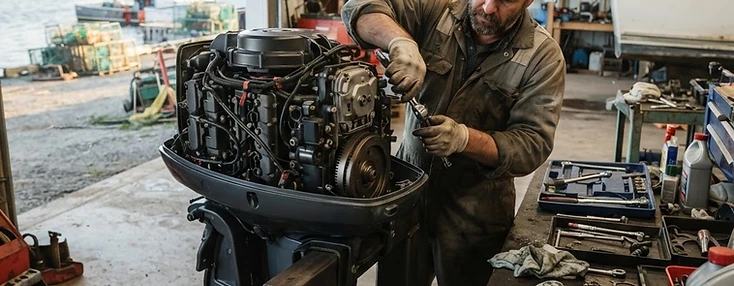
THE TOWN THAT KEEPS THE COAST SUPPLIED, COLD AND RUNNING.
Shippagan sits where the peninsula road ends and the working water begins. Since the reform, the town and the neighbouring village that joined it form one municipality — the Town of Shippagan, with its own council and a trading reach that runs the length of the peninsula. What makes the place is not just the fleet that sails from here; it is the economy that stands behind every fleet: the suppliers of gear, engines and hardware; the marine-service and welding shops; the refrigeration contractors and cold-storage operators; the packaging, transport and logistics businesses; the garages, construction trades and property firms; the accounting, legal, insurance and technology practices a working region keeps close; and the restaurants, hotels and retailers of a town that draws the whole northeast corner of the province through a normal week. A small university campus adds students, staff and spin-off firms to the mix — one influence among several, context the town uses well.
The financing follows the role. Assets: commercial refrigeration and cold-room systems, material handling, repair-shop and welding equipment, marine-service gear, service trucks and trailers, contractor machinery, restaurant and retail equipment, professional technology. Cash: inventory and packaging ahead of the season, supplier payments, staffing carried into the busy stretches, receivable timing on accounts that settle in their own time, and the growth moves — a second truck, a bigger cold room, a new service line. The two ledgers are kept strictly separate below; in a town this mixed, that discipline is worth more, not less.
EQUIPMENT FINANCING IN SHIPPAGAN.
Refrigeration and cold-room systems, repair-shop and welding equipment, material handling, restaurant and retail equipment.
COMMERCIAL VEHICLES IN SHIPPAGAN.
Service trucks and cargo vans, delivery units, trailers — business use only.
WORKING CAPITAL IN SHIPPAGAN.
Inventory and packaging, seasonal preparation, receivable timing, staffing, repair stock.
SHIPPAGAN BUSINESSES SERVED.
Fisheries-support suppliers, marine services, cold-chain businesses, repair shops, contractors, professional firms, restaurants and retailers.
The community and its context
A TOWN AT THE END OF THE ROAD, IN THE MIDDLE OF THE WORK.
The reform drew the map, not the character: the former town of Shippagan and its neighbouring village came together into the current Town of Shippagan on the first day of 2023, taking in unincorporated ground around them, and the municipality now runs from its harbour front through the settled stretches beyond. This page serves the private businesses of that municipality wherever they sit — the wharf-side suppliers, the highway-front retailers, the shops and offices in between — and it treats them as what they are: the marine-commercial centre of the peninsula, not a single-industry village.
The campus on the town's edge is part of the picture the same way — a base of year-round customers, a pool of young talent, and the occasional firm started by someone who came to study and stayed to build. It is context, never a target: BizFin reviews private businesses only, and no institutional or academic facility belongs in a financing file. The files that come out of Shippagan stand on the businesses themselves.
Marine services and fisheries support
THE BUSINESSES BEHIND THE FLEETS.
Behind every working fleet stands a supply chain, and in this corner of the province much of it runs through Shippagan: the gear and equipment suppliers, the net lofts and rope and hardware counters, the marine and industrial retailers, the welding and fabrication shops, the boat-adjacent service businesses, and the contractors who build and maintain the wharf-side infrastructure the coast works from. Their own assets are plain business files — service trucks and cargo vans, trailers, shop equipment, welding and cutting systems, material handling, the inventory systems and technology a modern counter runs on.
One boundary matters here, and it is stated plainly: the vessels themselves, and the licences, quotas and allocations that sit behind much of this coast's commerce, are a different category — never assumed financeable, with eligibility depending on the specific asset and the lender or program behind a file. The shore-side economy is where the files are straightforward and the reviews are strong: the shop that services the fleet, the supplier that equips it, the carrier that moves its catch.
Cold chain and seafood commerce
THE COLD ROOMS OF THE PENINSULA.
Cold is an industry here. Refrigeration contractors, cold-storage operators, seafood-handling and processing-adjacent services, packaging suppliers and the freight businesses that move temperature-sensitive loads — together they form the working spine between the wharf and the market, and a large share of the peninsula's private cold-chain capacity sits in and around this town. Their files read on the equipment that holds the temperature: compressors and condensers, walk-ins and freezer rooms, blast and plate systems where a program supports them, forklifts and pallet handling, dock equipment and the delivery trucks that connect them.
The cash calendar runs with the working year — inventory and packaging laid in ahead of the busy months, supplier accounts settled on the coast's own rhythm, payroll carried through the stretches when the wharf is quiet and the shops are not. Those are working-capital files, kept deliberately apart from the equipment requests, and a town that lives by the temperature of its product knows why the separation matters: one replaces a compressor, the other gets the crew through to the next landing.
Repair, trades and professional services
THE SHOPS AND OFFICES A WORKING REGION KEEPS.
A marine-commercial centre runs on its fixers and its paperwork alike. On the fixing side: garages and heavy-equipment repair shops, marine and industrial mechanics, electricians, plumbers and HVAC firms, general contractors and renovation crews, excavation operators and the property businesses that hold the town's buildings together. On the paperwork side: accounting and legal practices, insurance and real-estate offices, technology and communications firms, and the professional services a region with money moving through it always keeps close. The two sides buy different assets — hoists and diagnostic gear on one, systems and fit-outs on the other — and both review on the same things: the client list, the billing history, the work behind the ask.
The fleet question is permanent on the fixing side — another service truck for the crew, a first van for the mechanic going out alone, replacements paced to the contracts — and every one of those units stays on the business side of the lot. Consumer auto finance is a different trade, one BizFin is not in.
Automotive & trades financingProfessional services financing
Working capital, growth and succession
THE CASH OF A TOWN THAT WORKS THE WATER.
Working capital in Shippagan is the difference between a season met and a season missed: inventory and packaging on the shelf before the work starts, supplier payments that keep priority accounts open, staffing for the months when everything lands at once, receivables bridged where clients settle in thirty or sixty, repair stock on hand for the equipment that cannot wait a week for parts, and the marketing that fills the quiet stretch. None of it needs an asset request attached — operating cash keeps its own file here, by design.
Growth and succession are both live in a town built on owner-operated firms: the marine-supply house passed to the manager who ran the counter for a decade, the repair shop sold to the lead mechanic, the restaurant bought as a going concern by the people who already work it, the cold-storage business expanding a room at a time. Expansion files and acquisition files both get the same honest weighing — the business, its cash flow, the buyer's contribution, the program behind the file — and no outcome is promised before the review says so.
EXPLORE NEARBY NEW BRUNSWICK COMMUNITIES.

Tracadie
Acadian Peninsula
Acadian Peninsula francophone service centre for the fishing coast.
Business financing in Tracadie
Caraquet
Acadian Peninsula
Acadian coastal fishing and seafood-processing town.
Business financing in Caraquet
Lamèque
Acadian Peninsula
Island fishing-port economy — processing, peat and marine services.
Business financing in LamèqueQUESTIONS ABOUT FINANCING IN SHIPPAGAN.
Ready to explore?