
BUSINESS FINANCING
IN CAMBRIDGE.
Cambridge is the Twin Cities' auto-manufacturing anchor — operating Toyota assembly plants and their supplier corridor, plus food processing, textiles heritage and 401 logistics. BizFin.ca helps Cambridge businesses explore financing for plant equipment, supplier systems and working capital.
Proudly Canadian. Built for Canadian businesses.
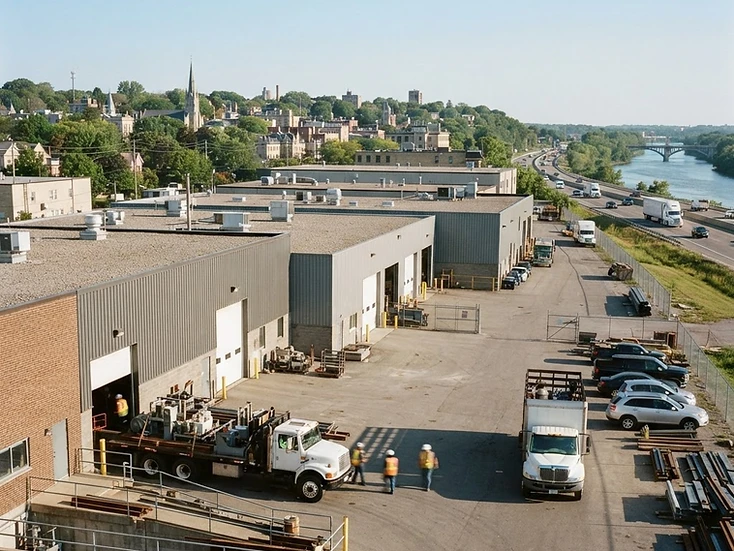
ASSEMBLY PLANTS, SUPPLIERS AND A 401 LOGISTICS BELT.
Cambridge holds the region's automotive heart: Toyota operates assembly plants in the city, and around them runs the supplier corridor — parts makers, tool shops, fabricators and industrial-service businesses working the automotive calendar. Capacity in that world is committed ahead of programs: tooling, machining systems and service fleets all precede the production runs that pay for them.
Food processing and the 401 logistics corridor add a second base — processing plants, distribution operations and the trucking that serves them — while the city's three historic cores (Galt, Preston, Hespeler) carry the construction, trades and commercial services of a city of 150,000.
BizFin.ca helps Cambridge businesses across the automotive, food and service layers explore equipment, vehicle and working-capital financing matched to their actual operations, where eligible.
Cambridge's three historic cores — Galt, Preston and Hespeler — grew around manufacturing, and manufacturing still sets the city's capital rhythm: auto-parts suppliers, metal fabricators, food processors and advanced-manufacturing plants buying production equipment ahead of program volumes, validated before first shipment, repaid after. The textile heritage lives on as precision: the same firms that once ran knitting mills now run automation cells, and the financing conversation has moved from looms to robotics without changing its shape.
The historic cores have become commercial destinations in their own right — restaurants, breweries, specialty retail and the event venues drawn to century stone and riverfront. Each opening is the standard deposit-equipment-staffing-revenue arc, executed at heritage-building cost: fitting out a stone-foundry building is more expensive than fitting out a strip-mall unit, and the financing that bridges that difference is what turns a leased landmark into an opened business instead of a stalled one.
The 401 frontage gives Cambridge the corridor's standard logistics layer — warehouse tenants, regional carriers and packaging operations installing fleets and handling equipment at lease signing — and the growth corridors south of the city keep trades and construction businesses expanding their fleets ahead of subdivision phases that bill on deposit-and-closure schedules. Where eligible, BizFin.ca helps Cambridge businesses across the manufacturing, heritage-commercial, logistics and trades layers explore financing matched to each — through one review of the actual business.
Cambridge's plastics and injection-molding suppliers form a manufacturing sub-economy of their own: mold shops, molders and the secondary finishing and assembly operations that surround them, all buying presses, molds and automation ahead of quoted programs. A molding program is won on capacity and lead time — the shop that can run the tool first gets the program — so the equipment financing decision is inseparable from the sales decision.
The city's residential growth — among the fastest in the region — keeps an entire homebuilding supply chain expanding behind it: excavators, framers, mechanical crews, and the building-product suppliers who carry receivables between delivery and draw. Cambridge's trades businesses finance fleets for the pipeline they expect, and the pipeline keeps arriving: each subdivision phase south of the 401 is a season of work that was financed before it was booked.
Cambridge's river-flats food and beverage layer keeps the city's industrial mix broad: processors, bottlers and the packaging suppliers around them running lines installed ahead of contract volumes on wholesale terms that clear weeks after the goods move. Food processing concentrates the program economy's timing into its sharpest form — capacity commissioned against a customer's start date, ingredients bought by the lot, revenue arriving on someone else's calendar — and the city's operators finance for that sequencing or lose the program to a supplier who does.
WHAT DRIVES BUSINESS IN CAMBRIDGE.
Auto assembly & supply chain
Operating Toyota assembly plants plus the tool shops, parts makers and service businesses around them.
Food processing & manufacturing
Processing plants and manufacturers buying production and packaging systems.
401 logistics & distribution
Corridor warehousing and trucking running handling systems and fleets.
Construction & community services
A three-core city's building market, trades and commercial services.
Auto-parts & advanced manufacturing
Suppliers and fabricators buying production equipment ahead of program volumes along the manufacturing belt.
Heritage-core hospitality
Restaurant, brewery and venue operators fitting out century buildings at heritage-construction cost.
401 logistics & growth trades
Warehouse tenants and subdivision-phase contractors financing fleets ahead of contract and closing schedules.
Plastics & injection-molding suppliers
Mold shops and molders buying presses, tools and automation ahead of quoted programs decided on lead time.
Growth-corridor homebuilding trades
Excavation, framing and mechanical businesses financed ahead of subdivision phases that arrive each season.
Food & beverage processing
Processors and bottlers running commissioned lines against contract volumes on slow-clearing wholesale terms.
THE SPECIALIZED CAPITAL ECOSYSTEMS OF CAMBRIDGE.
Start & Expand a Commercial Fleet
Cambridge's fleets serve the automotive and food base: parts and service trucks for the supplier corridor, day cabs and straight trucks on the 401, and the trades vans of a continuously building city. Where eligible, businesses may have options to finance or lease the entire business-use vehicle — not just the equipment inside it.
THE EQUIPMENT BUSINESSES OPERATE IN CAMBRIDGE.
Plant & Tooling Equipment
Machining, tooling and production systems.
Industrial-Service Equipment
Maintenance and supplier-support systems.
Warehouse Systems
Racking, docks and material handling.
Service & Fleet Vehicles
Service trucks, day cabs and vans.
Food-Plant Systems
Processing and packaging equipment.
Working Capital
Supplier and payroll cycles.
Production & automation systems
Heritage fit-out packages
Warehouse & trades fleets
WHERE CAMBRIDGE BUSINESSES USE CAPITAL.
- Financing machining, tooling and production equipment
- Equipping supplier and industrial-service businesses
- Adding warehouse systems and 401-corridor fleets
- Food-plant processing and packaging systems
- Bridging supplier and industrial receivables
- Program equipment validated and running before the first shipment it was bought for clears
- Heritage fit-outs financed to open rather than stall between deposit and first revenue
- Lease-signing equipment commitments recovered from contract volumes that follow
- Subdivision phases that bill on schedules crews did not set
- Molding programs awarded on lead time, with capacity financing inseparable from the sales decision
- Homebuilding supply chains that carry receivables between delivery and draw
TOOLING AND SERVICE CAPACITY BOUGHT AHEAD OF THE PROGRAMS.
Around operating assembly plants, suppliers commit tooling, equipment and fleets before the programs bill for them. BizFin.ca helps Cambridge businesses explore that financing.
FINANCING OPTIONS FOR CAMBRIDGE BUSINESSES.
Working Capital
Flexible capital for cash flow, payroll, suppliers, operating expenses and opportunities.
Learn moreBusiness Expansion Financing
Help finance another location, added capacity, renovations or staffing.
Learn moreBUSINESS FINANCING BY INDUSTRY IN CAMBRIDGE.
Manufacturing
Machinery, materials, production and capacity.
Learn moreTransportation & Trucking
Fuel, repairs, equipment, fleet and operating costs.
Learn moreConstruction
Equipment, materials, payroll, projects and the next job.
Learn moreAutomotive & Trades
Tools, vehicles, parts and working capital.
Learn moreWholesale & Distribution
Inventory, purchase orders, equipment and expansion.
Learn moreCAPITAL FOR WHAT BUSINESSES FACE IN CAMBRIDGE.
RESOURCES FOR CAMBRIDGE BUSINESSES.
A STRAIGHTFORWARD WAY TO GET STARTED.
Tell us what you need
Describe the financing need your business is facing in this market.
We review your information
Your business profile helps identify financing options that may fit.
You decide
Review any available option and decide whether it makes sense for your business.
QUESTIONS ABOUT FINANCING IN CAMBRIDGE.
Official references
- Toyota Canada corporate disclosures
- City of Cambridge economic profile
- Highway 401 corridor logistics context
EXPLORE OTHER BIZFIN.CA LOCATIONS.
EXPLORE BUSINESS FINANCING IN CAMBRIDGE.
BizFin.ca — Finance your next move.