
Grand Falls, New Brunswick
GRAND FALLS BUSINESS
FINANCING.
Grand Falls is the bilingual service pole of the upper Saint John valley — a potato-belt agri-food town where farm-support businesses, food-related processing and distribution operations, the cold chain, commercial trucking, construction firms and bilingual professional services serve one of Canada's best-known farming regions. BizFin.ca helps Grand Falls businesses explore equipment financing, commercial vehicles, working capital and growth options through one Canadian review.
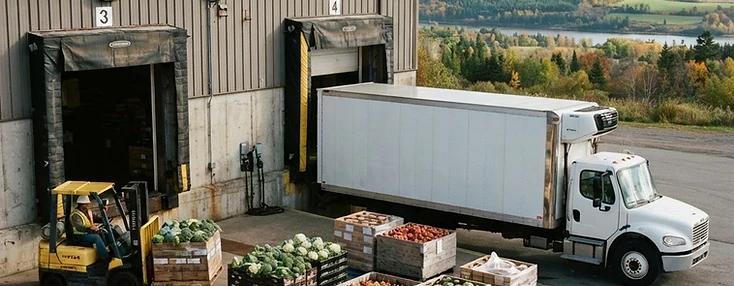
AGRI-FOOD, WHEELS AND BILINGUAL COMMERCE IN THE UPPER VALLEY.
Grand Falls carries an officially bilingual name for a reason: business here runs in French and English in the same breath, every day. The town anchors the upper Saint John valley's potato belt, and around that farm economy stands a thick layer of private support businesses — equipment sales and service, repair and machining, storage and handling, seed and supply — plus food-related processing and packaging operations, the cold chain that moves food from the valley to the customer, commercial trucking along the corridor, construction and trades, and a bilingual retail and professional-services core. The falls in the gorge below the town draw visitors the whole season through.
Financing here splits into assets and cash, and the review keeps them apart. Assets: agri-service and handling machinery, processing and packaging equipment, refrigeration and cold-storage systems, forklifts and warehouse gear, commercial trucks and trailers, construction equipment, shop tooling, business technology. Cash: seed, supply and packaging purchases ahead of the season, payroll through the harvest peak, receivable timing on food and farm accounts, fleet growth, expansion. Both halves are covered below, each in its own right.
EQUIPMENT FINANCING IN GRAND FALLS.
Handling machinery, processing and packaging equipment, refrigeration and cold-chain systems, shop tooling, construction gear.
COMMERCIAL VEHICLES IN GRAND FALLS.
Tractors and straight trucks, service units, trailers, delivery vehicles — business use only.
WORKING CAPITAL IN GRAND FALLS.
Pre-season purchases, packaging inventory, harvest-peak payroll, receivable timing, fleet growth.
GRAND FALLS BUSINESSES SERVED.
Agri-service firms, food and cold-chain businesses, carriers, contractors, trades, bilingual retail and professional services.
The town and its context
THE FALLS, THE FIELDS AND A TOWN THAT SPEAKS BOTH LANGUAGES.
The river drops into a famous gorge here, and the town above it serves a farming region whose name travels: the upper-valley potato belt is one of the enduring engines of New Brunswick agriculture, and the private economy of Grand Falls exists because that farm economy does. Dealers, repair shops, storage operators, food businesses, carriers and professional practices serve farms and processors up and down the valley — a wide, rural, bilingual market that rewards businesses people can trust in either language.
One boundary belongs up front. BizFin.ca is not a farm-program administrator: no government agricultural programs, crop guarantees or commodity lending are offered or described here — those belong to their own administrators. What is reviewed is the private layer: the equipment, vehicles, processing, agri-service and supply businesses that keep a farm region running, and working capital where the program permits.
Farm support without the farm programs
THE BUSINESSES THAT KEEP A FARM REGION RUNNING.
Every durable farm economy grows a private service economy around it, and the upper valley is a textbook case: equipment sales and service operations, repair and machining shops, storage and handling businesses, seed and supply firms, agronomy-adjacent service contractors, fuel and bulk distributors, and the haulers who move crops and inputs in season. Their customers are farms and food businesses; their own firms are ordinary private companies that buy, replace and finance their own machinery.
Their asset lists lean practical: loading and handling equipment, workshop machinery and diagnostics, service trucks and trailers, storage and handling systems, shop tools. Files land strongest as complete eligible packages — a single quote covering the whole acquisition, with delivery and installation included where the program allows. Proven used machinery with service records is reviewed on remaining working life, and the answer arrives in plain language either way.
Automotive & trades financingWholesale & distribution financing
From the field to the customer
PROCESSING, PACKAGING AND THE COLD CHAIN.
Food-related private business is a defining layer here: processing and packaging operations, cold-storage and warehousing businesses, and the distribution firms that move food through the valley and far beyond it. The cold chain is equipment-heavy by nature — compressors and refrigeration systems, insulated handling, dock and door equipment, forklifts and racking, monitoring and control systems — and the businesses behind it range from long-established operations to young firms carving out a niche.
Financing follows the equipment's own logic: refrigeration and processing assets reviewed on their working life, warehouse and handling systems packaged as one acquisition when the quote covers it. The cash side of a food business — packaging inventory, raw materials, energy and staffing through peak — is financed as working capital and kept out of the asset file, so each side of the operation is funded for what it actually is.
Trucks along the valley corridor
THE HAULERS OF A FOOD-AND-FARM CORRIDOR.
Commercial trucking runs on the valley's rhythm: crops and inputs moving in season, food and general freight moving year-round, distribution runs tying the upper valley to the province and beyond. Carriers, couriers, bulk and fuel services and the repair shops that support them base here for exactly that reason — the corridor is the market. Every vehicle file is business-use financing: a route, a contract or a customer book behind each unit, never a personal vehicle in disguise.
Fleet requests arrive in every shape and size: a first dedicated tractor for an owner-operator stepping up, staged renewals for a carrier refreshing trucks one at a time, a full program for an operator scaling at once. Late-model used units with maintenance records review on equal footing with new, and trailers and equipment can ride in the same package where the program permits. The review reads the routes and contracts behind the units — that is what answers the question.
Building and serving the town
CONTRACTORS, KITCHENS AND OFFICES ABOVE THE FALLS.
The town itself keeps a busy private economy: general contractors, excavators and the building trades working a growing community, restaurants and cafés, accommodations and tourism operators serving gorge visitors, bilingual professional practices — accounting, insurance, legal support, design — and a retail core with a wide rural customer base. Tourism and commerce share the same streets here, and both own commercial assets: construction machinery, kitchen packages and refrigeration, fixtures and fit-out, point-of-sale systems, office and business technology.
Their cash calendar follows the seasons — the tourist stretch above the falls, the farm economy's peak in the fields, the quiet months that reward planning. A review can sequence that year honestly: the fit-out financed ahead of the season, working capital for the inventory and staffing build, receivable timing bridged on commercial accounts, expansion opened in front of demand rather than behind it.
Working capital, growth and succession
SEASONAL CASH, STEADY GROWTH — AND THE NEXT OWNER OF A VALLEY BUSINESS.
Working capital in a farm-region town follows the farming calendar, and the review plans against it: seed, supply and packaging purchases made ahead of the season, payroll carried through the harvest peak, receivable timing on food and farm accounts that settle on their own schedule, fleet growth timed to contracts, a second location opened when demand justifies it. Operating money is never presented as equipment financing — the two files stay separate on purpose, and both get reviewed properly.
Succession is quietly constant in valley towns: an equipment-and-repair business with a loyal farm customer book, a food distribution firm with decades of relationships, a carrier's routes sold as a going concern, a family retailer passing to a new generation. Acquisition and succession files are genuine and reviewable — weighed on the business, its cash flow, the buyer's contribution and the program behind the file, with nothing promised before the review is done.
EXPLORE NEARBY NEW BRUNSWICK COMMUNITIES.

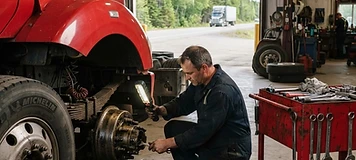
QUESTIONS ABOUT FINANCING IN GRAND FALLS.
Ready to explore?