
Dalhousie, New Brunswick
DALHOUSIE BUSINESS
FINANCING.
Dalhousie sits at the mouth of the Restigouche, where the river opens onto Chaleur Bay — a bay-shore business community within the Town of Heron Bay (Baie-des-Hérons) whose present economy runs on services rather than smokestacks: contractors and trades, repair and property-service firms, restaurants, inns and accommodations, marine and coastal tourism, and the shops and professional practices of a small coastal centre. BizFin.ca helps businesses in the Dalhousie area explore equipment financing, commercial vehicles, working capital and growth options through one Canadian review.
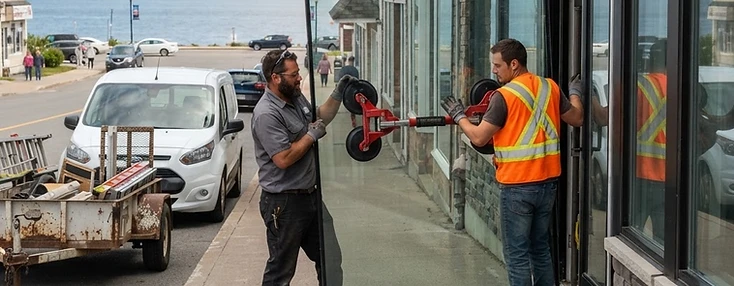
A business community within the town of Heron Bay.
AN ECONOMY BUILT ON SERVICES, NOT SMOKESTACKS.
Dalhousie carries one of the province's clearest industrial pasts — the paper mill that anchored this waterfront for generations closed in 2008 and the site is gone — and then rebuilt itself around what a bay-shore town does best: serving a region. Today's private economy is construction and trades, repair and property-service shops, restaurants, cafés and accommodations, marine and coastal tourism, a marina-side summer, and a local-commerce and professional-services core that draws customers from the surrounding communities.
The needs come in the two usual shapes. Assets: contractor machinery and tools, service trucks, shop equipment, kitchen and refrigeration packages, fixtures and fit-out, the systems a small office runs on. Cash: the seasonal build and the shoulder-season wait, inventory and staffing ahead of summer, receivable timing on the accounts that settle late, repairs and growth. Both are covered below, each in its own lane.
EQUIPMENT FINANCING IN THE DALHOUSIE AREA.
Contractor machinery, service trucks, shop tools, kitchens and refrigeration, fixtures and fit-out.
COMMERCIAL VEHICLES IN THE DALHOUSIE AREA.
Delivery vans, service pickups, contractor trucks, straight trucks and trailers — business use only.
WORKING CAPITAL IN THE DALHOUSIE AREA.
Seasonal inventory and staffing, supplier purchases, receivable timing, the shoulder-season bridge.
DALHOUSIE-AREA BUSINESSES SERVED.
Contractors, trades, repair and property services, restaurants, inns, shops and professional firms.
The community and its context
A COASTAL TOWN WITH A PAST AND A PRESENT.
Geography still does the heavy lifting: the town sits where the river meets the bay, on the water that made it a port in the first place and that now carries its summer economy — boating, fishing, festivals and visitors. The marina, the waterfront and every public facility are context, never financing targets; the audience is the private layer around them: the contractors, shopkeepers, hosts and service firms of the bay shore.
Municipally, Dalhousie has not been an independent town since New Brunswick's local-government restructuring: the community sits within the Town of Heron Bay (Ville de la Baie-des-Hérons), and businesses here are served accordingly. A financing review cares about where the business operates, what it owns and what it earns — not which municipal sign it sits under.
Contractors, trades and property services
THE BUILDERS AND FIXERS OF THE BAY SHORE.
Construction and the trades anchor the year-round economy: general contractors, renovators and finishing trades, excavators and site-work operators, and the property-service firms — grounds, buildings, cleaning, snow — that keep a coastal community and its seasonal properties in shape. Around them work the repair shops: automotive and small-engine, welding and machine work, the trades every rural service area depends on.
Their files are classic small-contractor files: machinery and attachments, service trucks and trailers, shop tools and diagnostic gear, and the working capital that bridges mobilization, materials and the wait on invoices. Complete equipment packages review well — a quote covering the unit, attachments and delivery where the program allows — and used machinery with documented history reviews on its remaining working life.
Hospitality and the coastal season
THE SUMMER THAT PAYS FOR THE WINTER.
The bay-shore season is a real economy: restaurants and cafés, inns, cabins and vacation rentals, charters and guiding services, marine services for visiting boaters, and the events that fill a festival weekend. Those businesses live on their cash calendar — inventory and staffing built ahead of the stretch, receivable timing on bookings and accounts that settle late, repairs fitted into the shoulder months.
Their assets are equally concrete: kitchens and refrigeration, fixtures and fit-out, reservation and point-of-sale systems, dockside and grounds equipment, courtesy and service vehicles. A review can lay the whole year out — asset requests ahead of the season, working capital through it, the quiet months planned rather than endured.
Local commerce, vehicles and professional services
THE SHOPS, FLEETS AND OFFICES OF A SMALL CENTRE.
A service economy runs on wheels: delivery vans and service pickups for the trades and shops, contractor trucks for the crews, courtesy and shuttle vehicles for hospitality, and the bigger units — straight trucks, trailers — for the firms moving materials around the region. Every vehicle file is business-use — a route, a contract or a customer book behind the unit.
Behind the storefronts sit the professional practices and service firms — accounting and insurance offices, agencies and clinics — and the retail and service businesses whose fixtures, refrigeration and business systems are their own financing needs. Small-market files review on the business, not the address.
Working capital, growth and succession
THE CASH AND THE CHANGING OF HANDS.
Working capital funds the ordinary engine of a coastal service economy: seasonal inventory and staffing, materials and supplier purchases, contract mobilization, receivable timing, the pre-season build and the post-season recovery, fleet growth, marketing that keeps a bay-shore name trusted, and the expansion moves — a second vehicle, a bigger dining room, a new service line. None of it is equipment, all of it can be financeable, and the two files stay separate on purpose.
Succession runs quietly through a town where goodwill is the real asset: an inn sold with decades of summer guests behind it, a repair shop passed to its lead mechanic, a contractor's equipment and customer book moving to a successor, a family store changing hands between generations. Those files are genuine and reviewable — weighed on the business, its cash flow, the buyer's contribution and the program behind the file, with nothing promised in advance.
EXPLORE NEARBY NEW BRUNSWICK COMMUNITIES.
Campbellton
Restigouche / Campbellton
Restigouche border service town with seafood processing and mountain-tourism access.
Business financing in Campbellton
Kedgwick
Restigouche / Campbellton
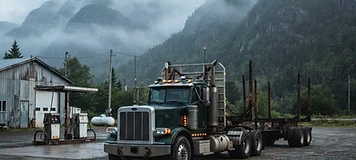
Backcountry forestry and wood-products rural community.
Business financing in Kedgwick
Saint-Quentin
Restigouche / Campbellton
Upper-Restigouche forestry service and wood-economy town.
Business financing in Saint-QuentinQUESTIONS ABOUT FINANCING IN DALHOUSIE.
Ready to explore?